

Showing posts with label Old Cummer Avenue. Show all posts

Sunday, December 18, 2005

Old friends in new clothes

I haven't been down to the East Donlands Park in about three months. Last time I was there, the river was still warm enough to wade, and it was still barefoot hiking season...


Time of the season

...Well, hiking season it may still well be, but not unless you're nicely trussed up. It was hand-numbingly cold as I took these shots. But I wanted to get out with my cameras and do some winter photography in a place I was familiar with from one season, but had never seen in its other facets.

Today I had with me both my cameras; my Canon 350D Rebel XT and my Kodak CX7330. I set the CX7330 to photograph in black and white and left the XT on "program" setting, letting the camera itself do all the tricky grunt work. Getting fancy with settings is a warm weather game. I was interested in contrasting how the scenes would look in colour and native black and white, again, without having to constantly flit settings back and forth on the XT.
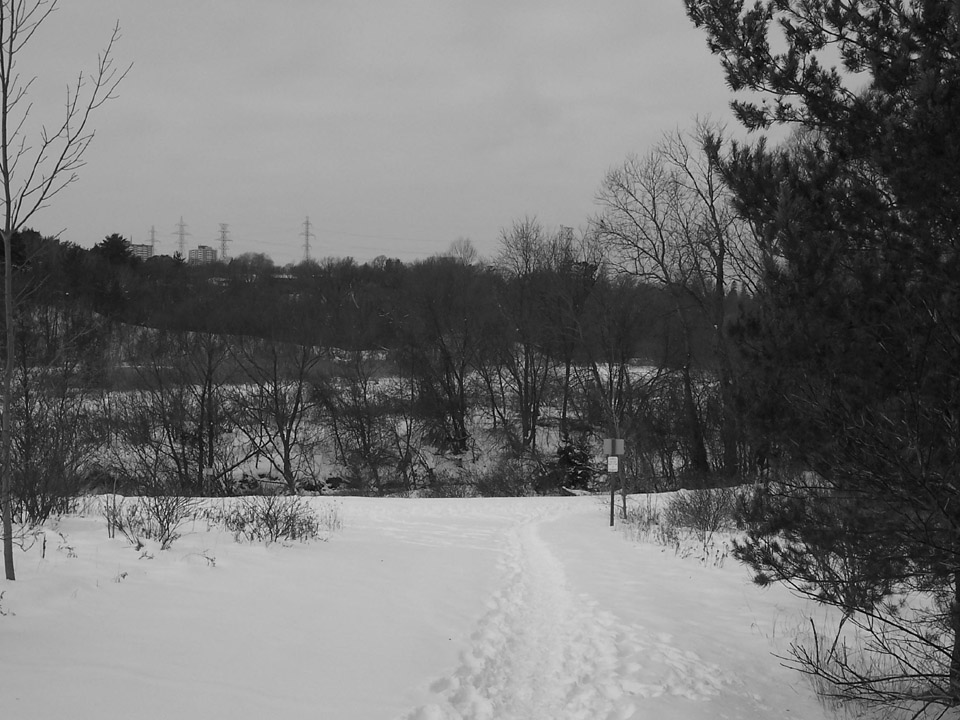

The approach

Above is the view heading down from Finch Avenue to the path through the forest to the old track of Cummer Avenue, which is a five-minute walk in good weather, but about ten minutes in the low-traction snow.


Up the path

Above is a view of the path as you step onto it. On the left in this shot is the East Don River. I found this shot very compelling when I got home and looked it over. It's the kind of scene, when I was a boy, I used to fantasize about simply disappearing into, becoming one with. The calm, cool simplicity and stillness of winter, forever.

Below is the first of our comparision shots. These are both panoramic images composed of three shots each, assembled by a stitching program that came with the XT. This is the first bend in the path as you head northward, before you emerge into the flood plain.


And, speaking of which, below is a comparison of how the flood plain itself looks in black and white and colour. I only bothered to take shots for a full panorama in black and white; the colour version is a single image.
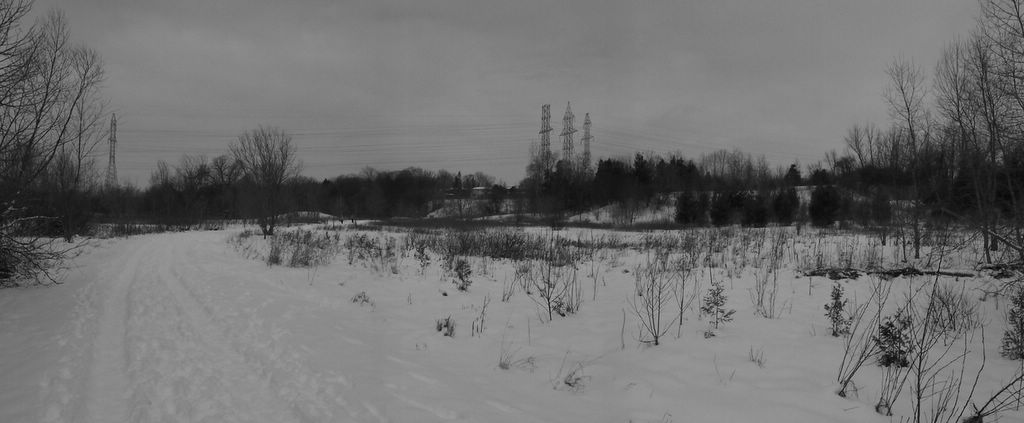


...I find the image in black and white much more sombre, more alluring somehow than the colour image. There's a sort of cheeriness in the colour one I find distracting from the solemnity and solitude of the place and the moment.

I find the same to be the case below, on the approach to Old Cummer Avenue Bridge itself. Judge for yourself.

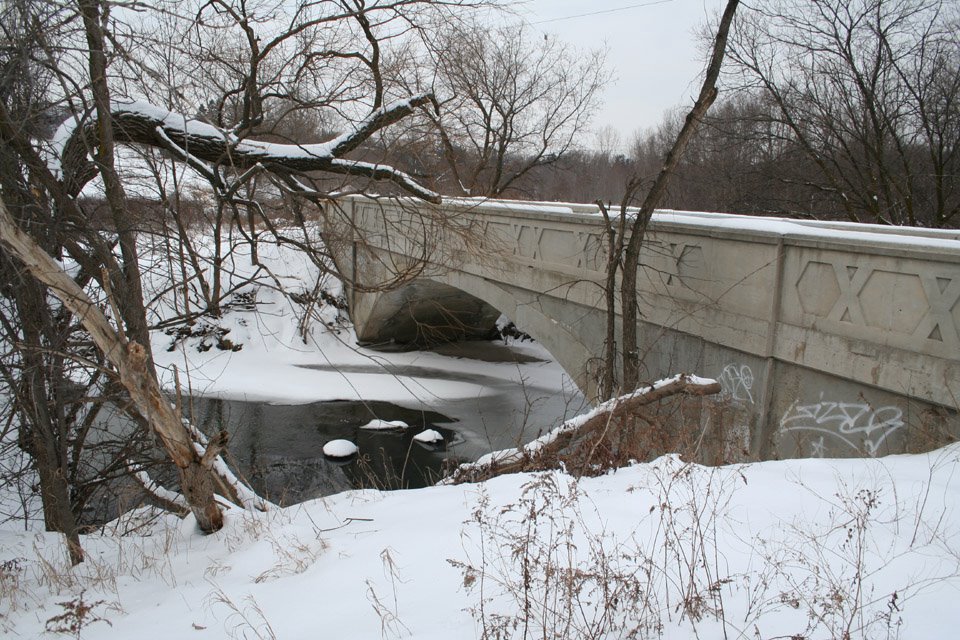


Last summer I was here frequently. I walked to the river and waded in it well over a dozen times; it was a magnificent communion. I'm fascinated by the place because it was once such a vital part of city life... cars crossed this bridge hundreds of times a day; people lived down in the valley shouting distance from where I was standing for these shots.
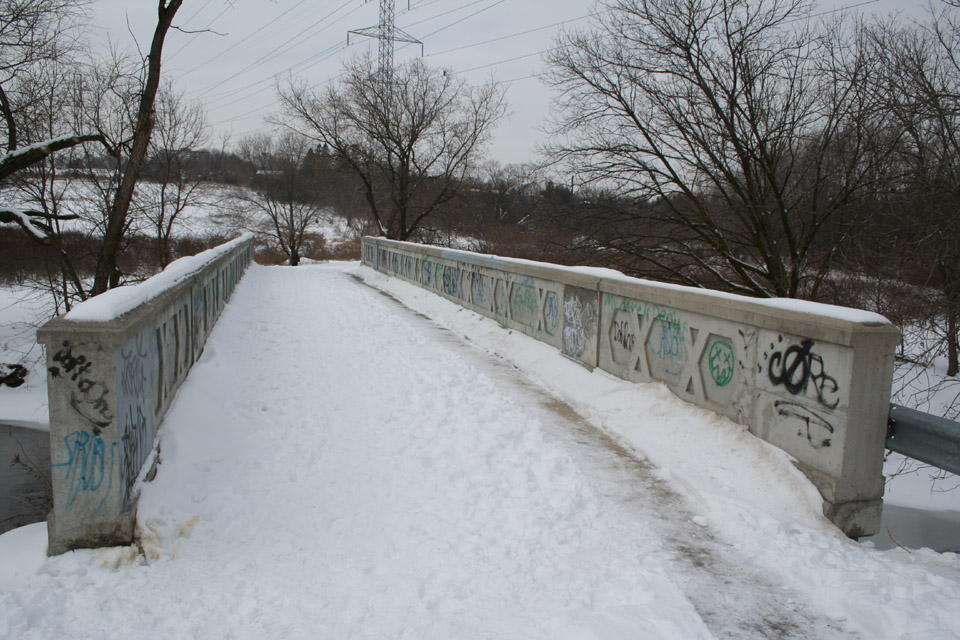

Looking west across the bridge
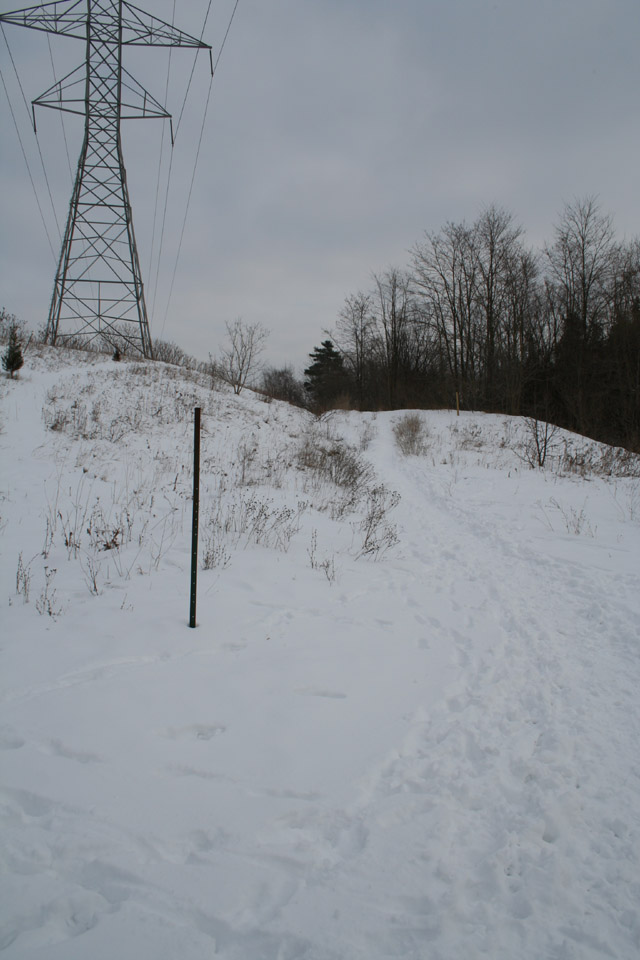

Looking east up the former route of Old Cummer Avenue -- must have been a steep climb in winter

Once on the bridge itself, I took in the beautiful views of the river just doing its thing.


Looking south down the East Don


Looking north up the East Don


The beauty of water in transition

Under the bridge itself, a broad sandbar had built up on the west side. This was utterly swept away in the August storm that also bisected Finch Avenue itself in the west end. I thought I'd see if things had changed. Sure enough, it looks as though the river is trying to pay back what it stole in its swollen rage: it has began depositing sand again in the slow, lazy west pocket of the bridge.


After taking in the bridge and the river, I headed west along the old track of the road. This way follows along the hydro corridor for about a hundred yards/metres and then heads abruptly north into the woods again. It's along this stretch, and northward, that about a half a dozen homes once stood, till the 70s and 80s. Once they were gone and the land upon which they stood was absorbed into the park, the old road clearance itself was closed, but continues to live on as a footpath.


Someone's home stood here till about 1980
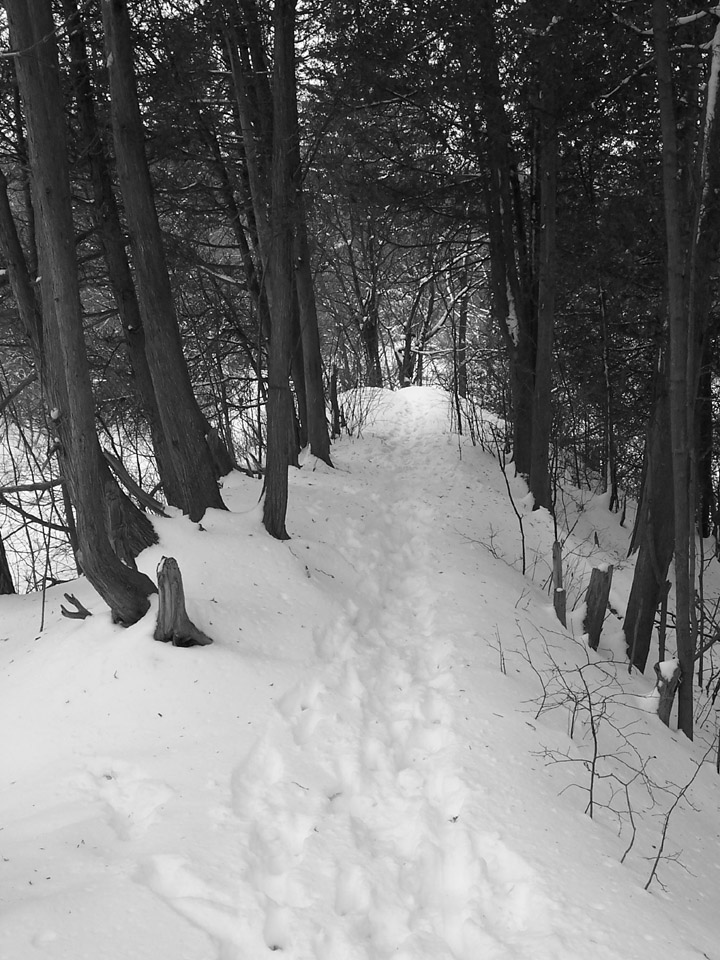

"And miles to go before I sleep..."

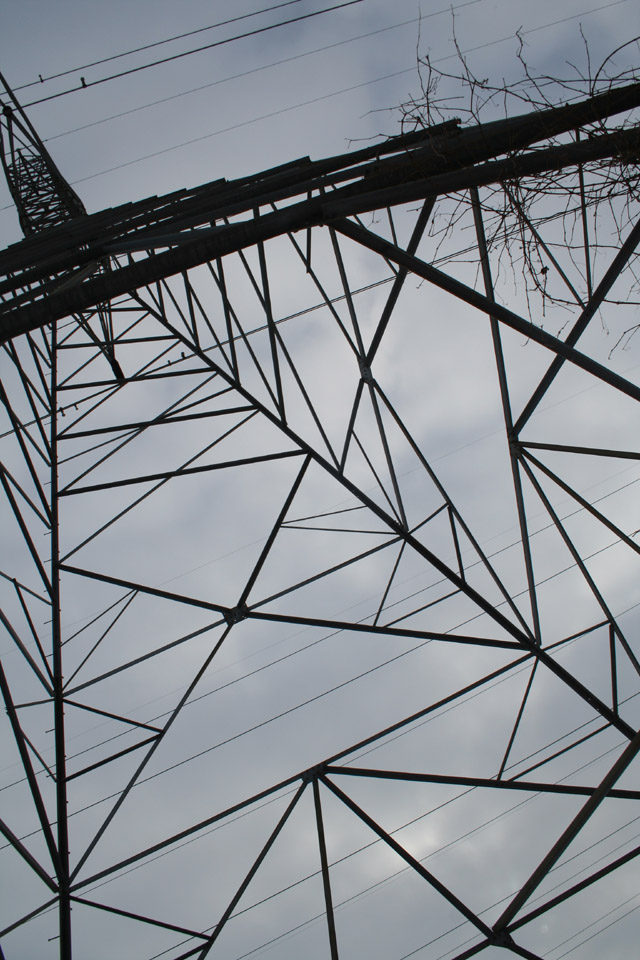
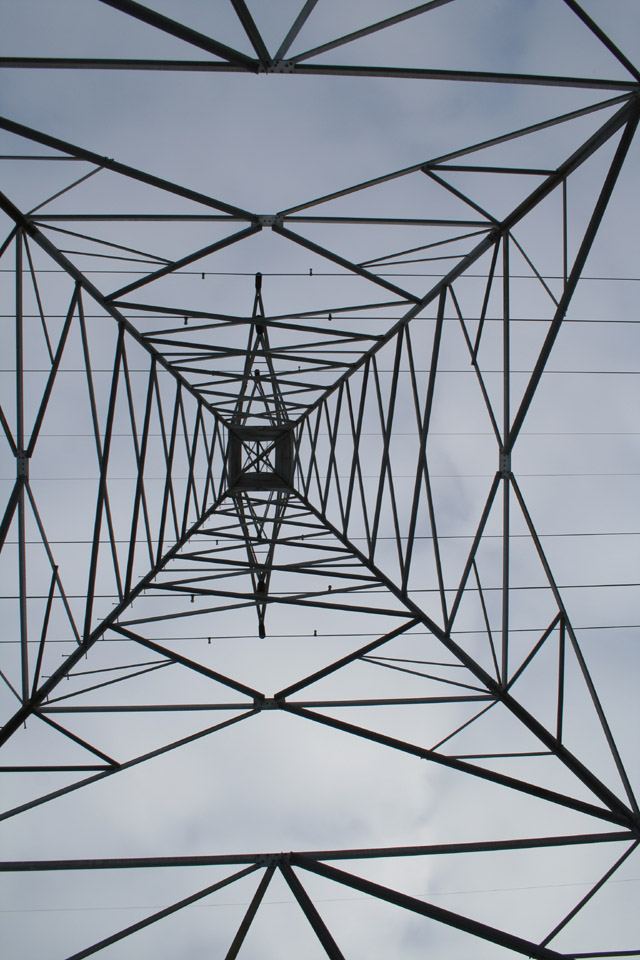
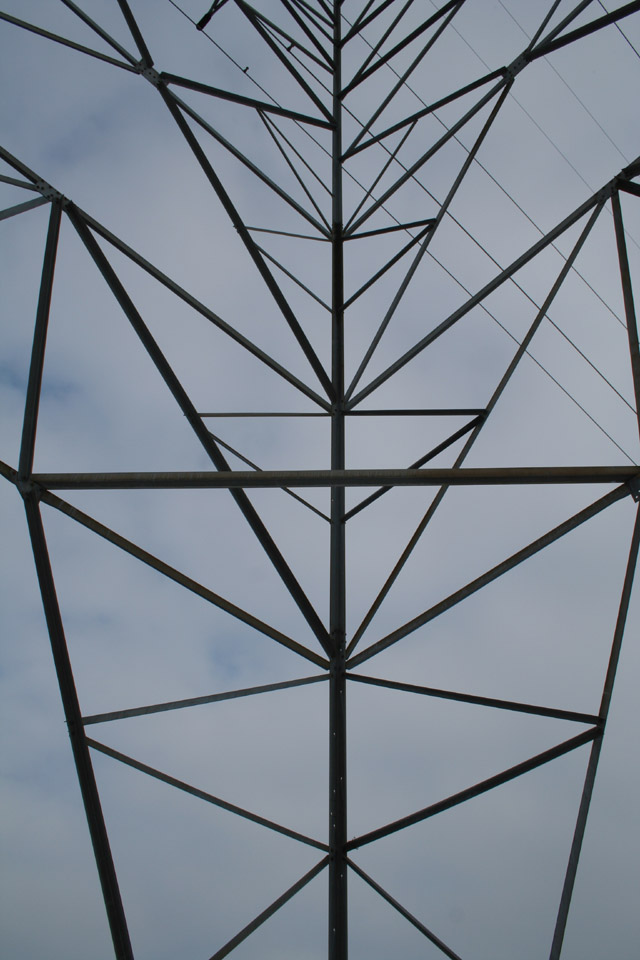
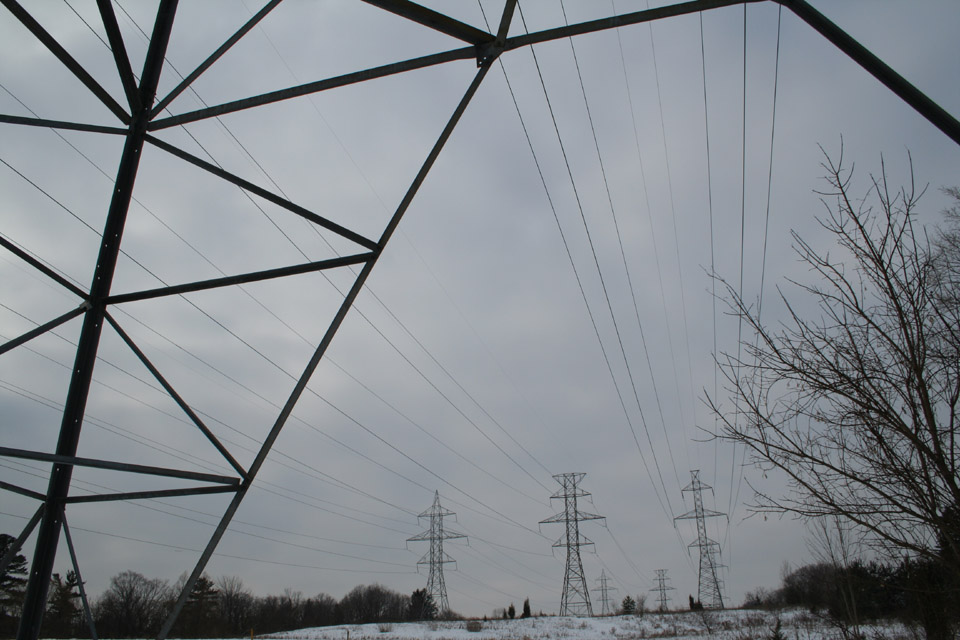
Something about hydro towers has always captivated me, even as a little boy. They seem like the skeletons of giant robots, just waiting for their chance to spring back to life and attack...


Skylines
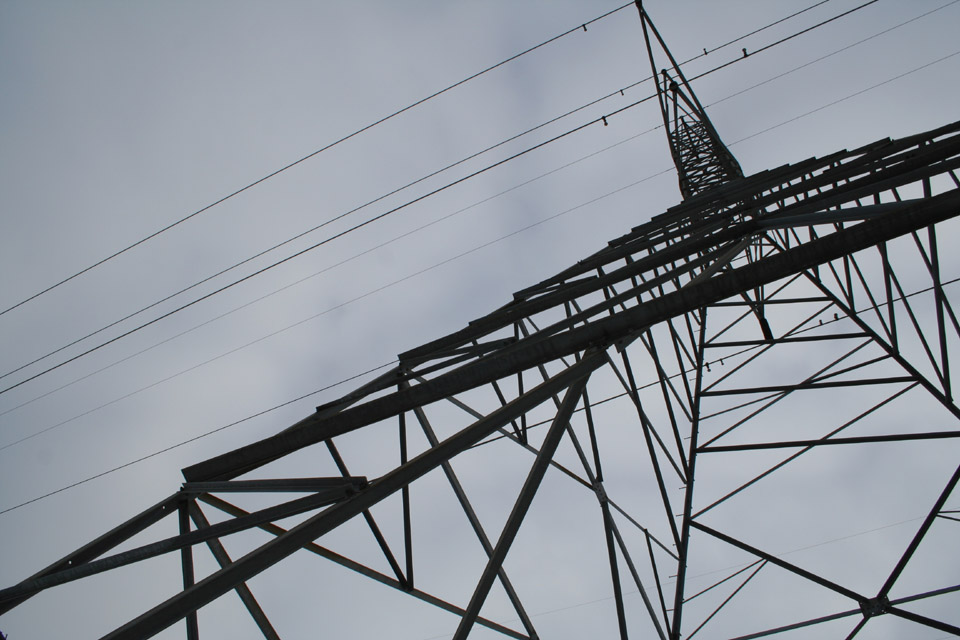

Thy fearful symmetry I

Thy fearful symmetry II

Thy fearful symmetry III

Thy fearful symmetry IV

Brothers west
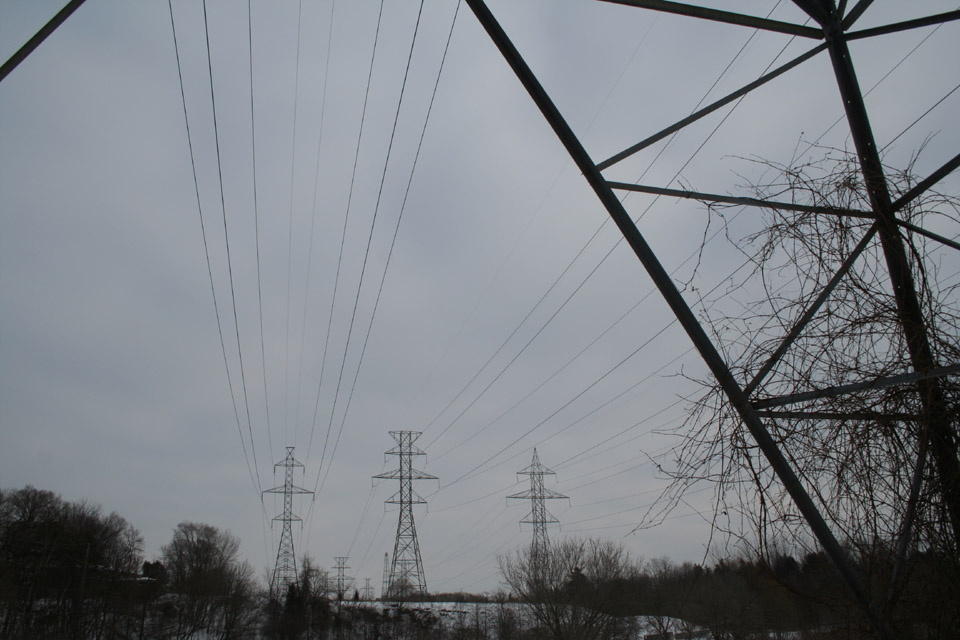

Brothers east

At this point, I was heading back. The remaining shots are wandering southbound again back the way I came, towards Finch Avenue.
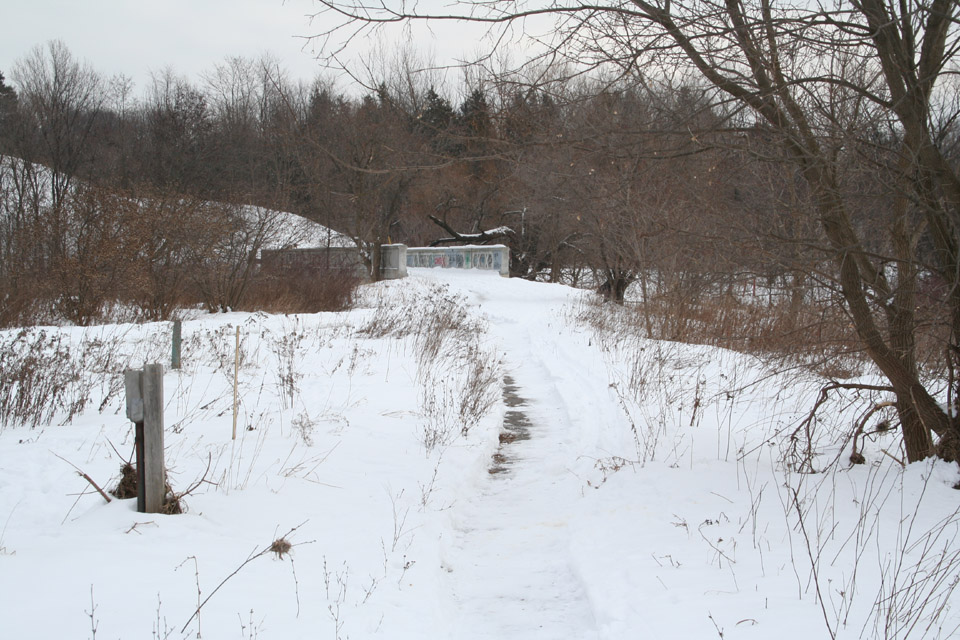

What a driver heading east on Cummer Avenue in winter once saw
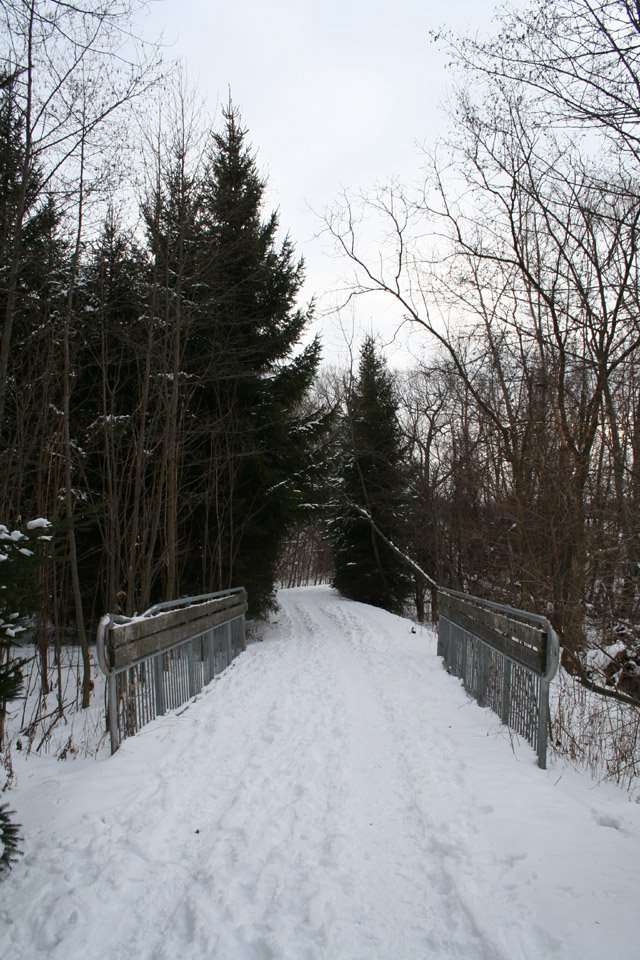

Southbound on the path
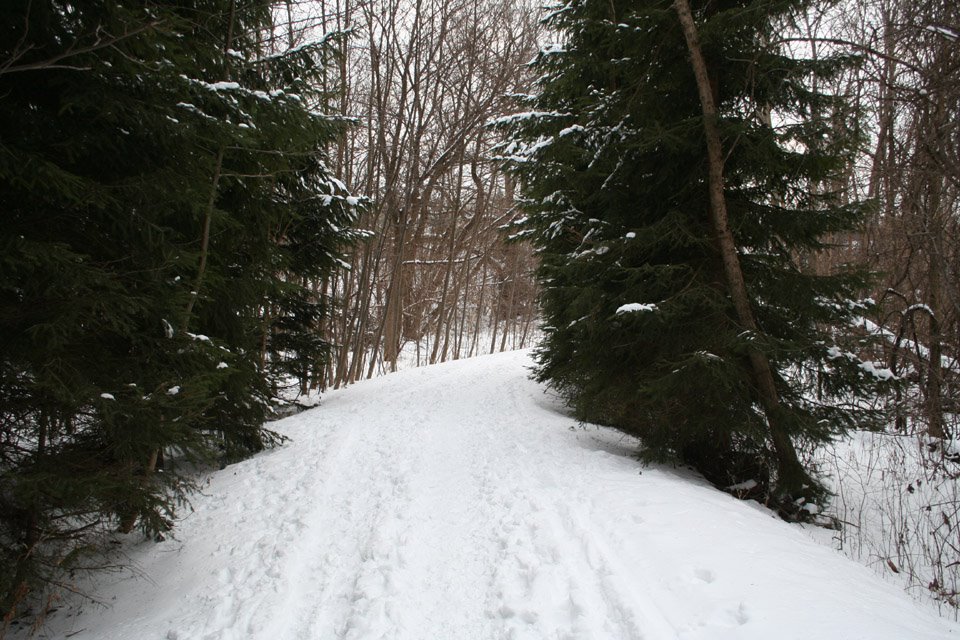

The bend seen from the north side

I'd brought my wide angle lens with me but completely forgotten about it until this point. With numbed hands, I managed to attach the thing to the primary lens and I got these marvelous, Christmassy shots. The last one, with the single ice crystal caught in the needles of a pine tree, I am particularly happy with. And we'll sign off on that. Hope you enjoyed the little stroll.
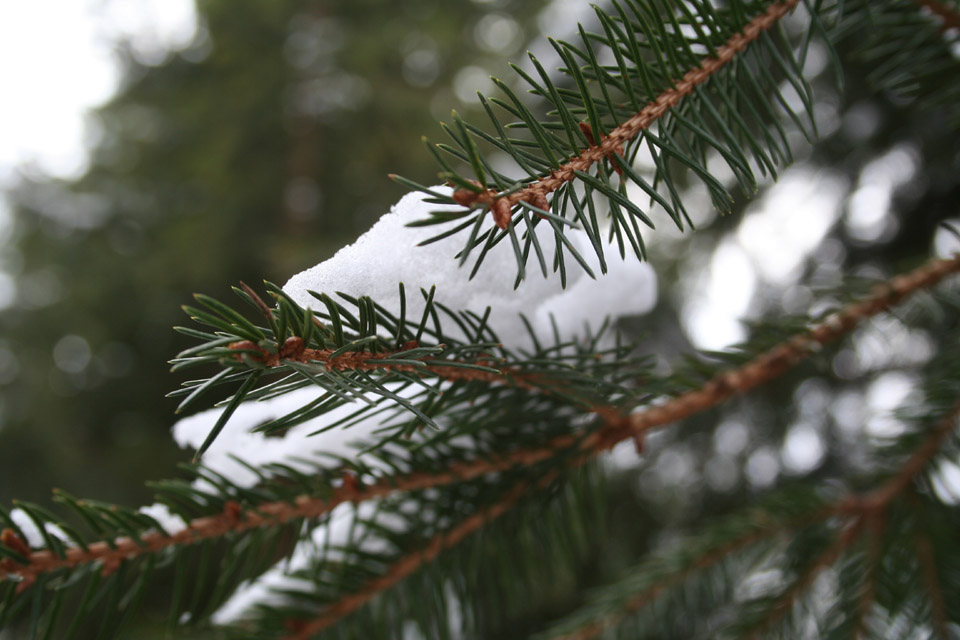

Snow and pine needles
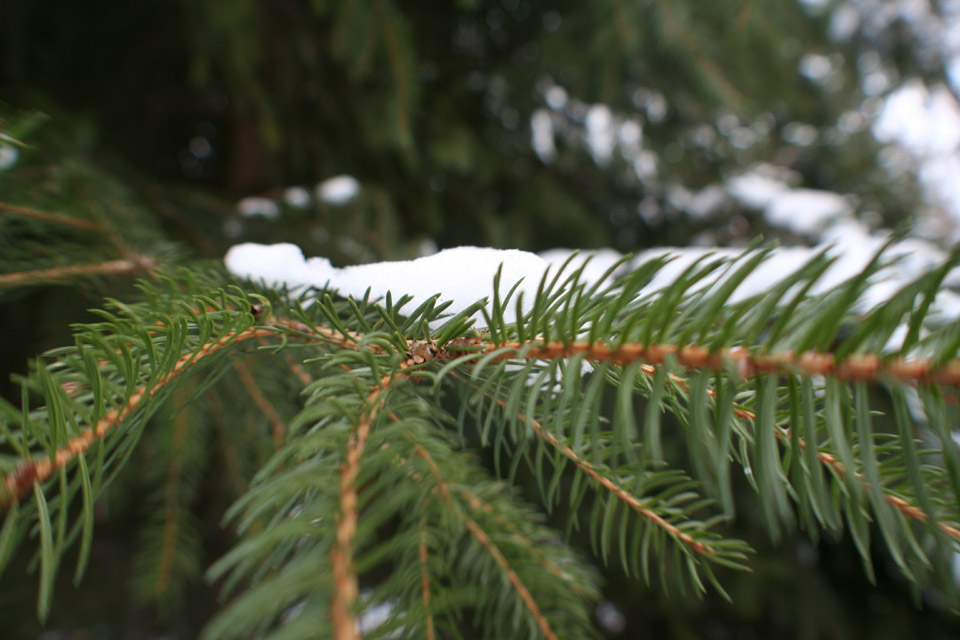

Evergreen overpass
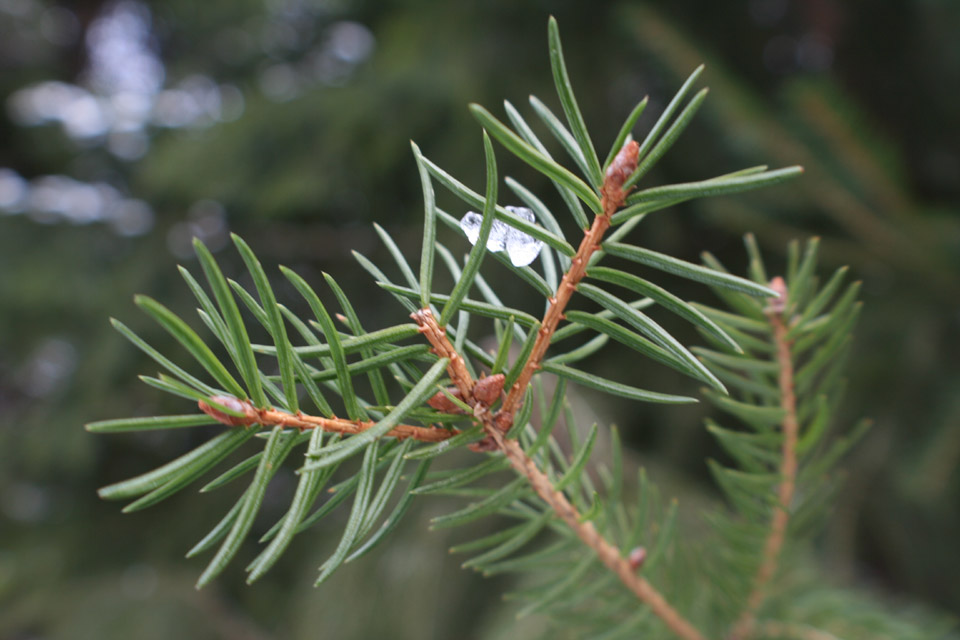

Nature slips an ice diamond onto the finger of a tree

Saturday, September 10, 2005

Who'll Stop the Rain?

I carried over two weeks of vacation from last year, and I convinced my boss to let me use them up as Fridays off this summer. Friday (yesterday, as I write this) was my last. Ah, it was a good summer, full of the kinds of wanderings I've always wanted to do. Seemed to me the best way to spend part of my last summery Friday was to make my way back to the East Don Parklands, since I hadn't visited since I photographed Orion.

If I had only been able to better see in the dark! A few things have changed about the park since I was out there photographing the full moon on the very eve of the storm.

The first real "ah ha" moment was as I was approaching Old Cummer bridge. I suddenly noticed that a chunk of the asphalt on the path had been undermined at the drainage ditch the runs down the hill parallel to the old road surface. My mind immediately went back to the big storm that raged so briefly but so furiously a few weeks ago. Seems it had worked some of its black magic in this part of town too, not just bisecting Finch Avenue.


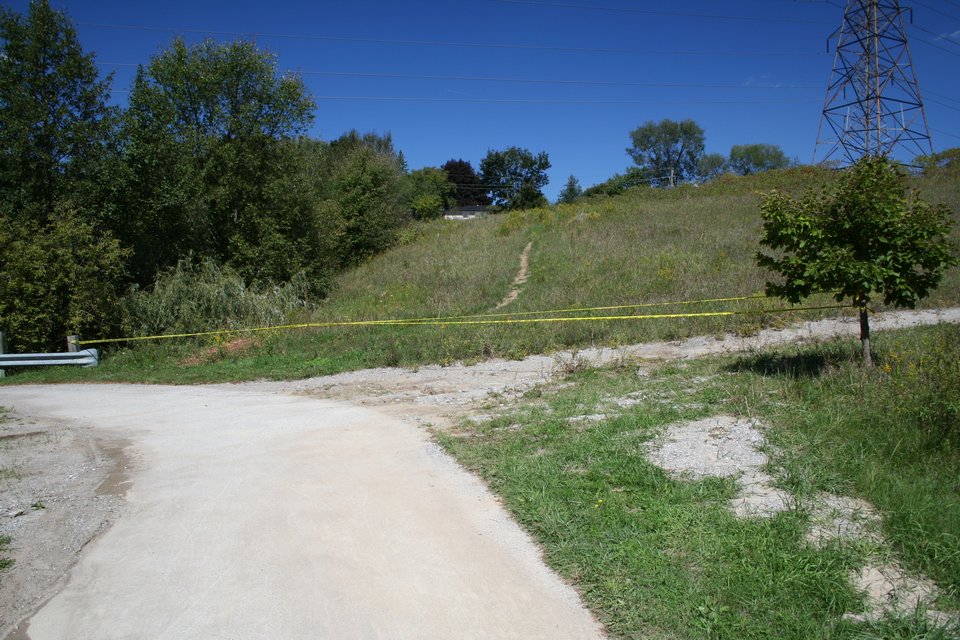
I noticed there was police tape across the bottom of the old road course. A first I wondered if a line had fallen. One up near the new course of Cummer did, starting a fire that my friend Dave and I were witness to on our way home on the day of the storm. It didn't occur to me, at the point I took the picture, that it might have been there to protect people from the volume of water that must have been pasing through.


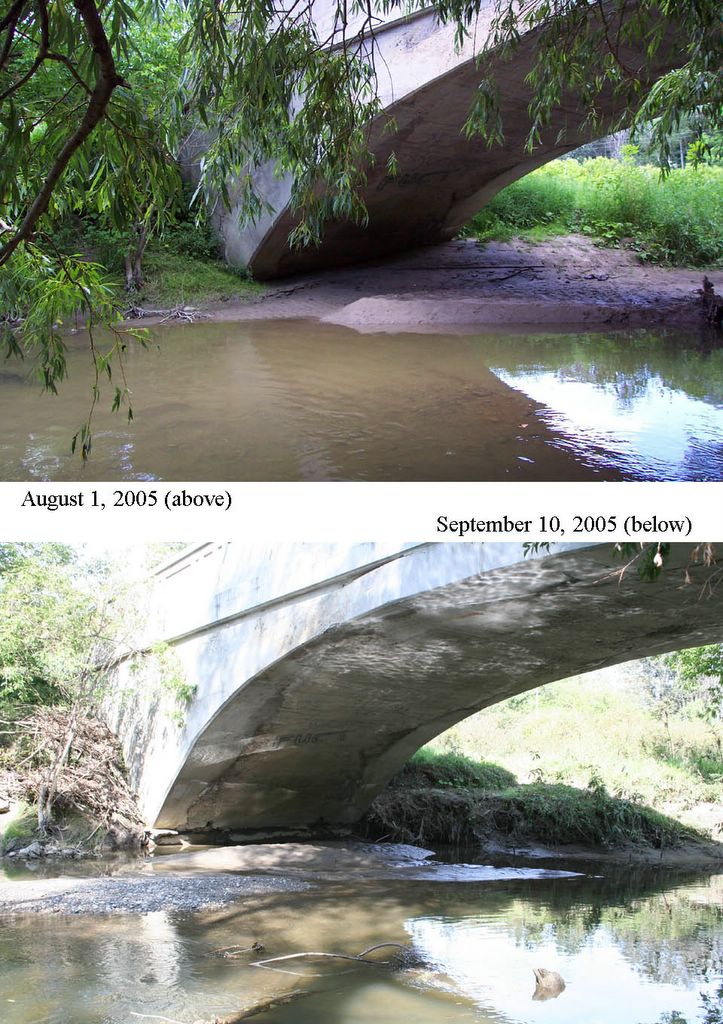
It was when I got to the bridge that I got my first big surprise. The way down on the west side had been a gentle slope down to a sandbar that afforded easy access to the river. No longer. The river had eaten a huge bite out of the bank. It was now a three-to-four foot drop straight into the river. All the sand that had built up against the western abutment had been washed away -- deposited, in fact, up on the grass of the southwest bank, by my reckoning. I went back there earlier today to try to match a shot I'd taken at the beginning of August, to provide some contrast. You can imagine the volume of water it took to rip away this much sand and clay in just an hour or so.


Friday, I didn't attempt to access the river at this point, but I had a friend with me today who held onto my camera and the photos I was trying to match as I eased down the hill. I waded to the centre to get this contrasting shot.


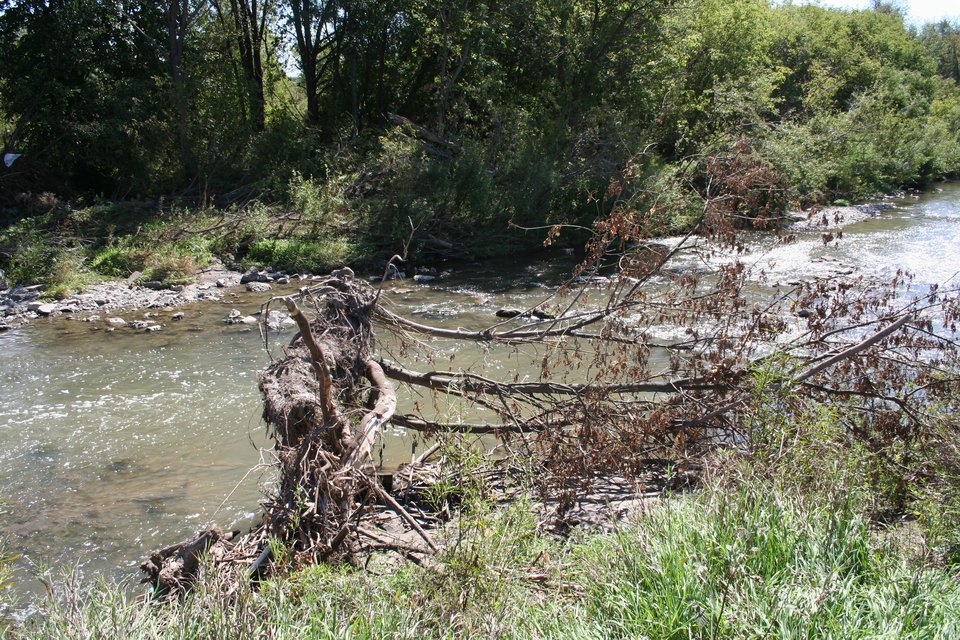
But before all this realization, yesterday, I decided to head down the river a bit to see how the beaver dam had fared. Along the way, I noticed things like this tree over turned in the water...


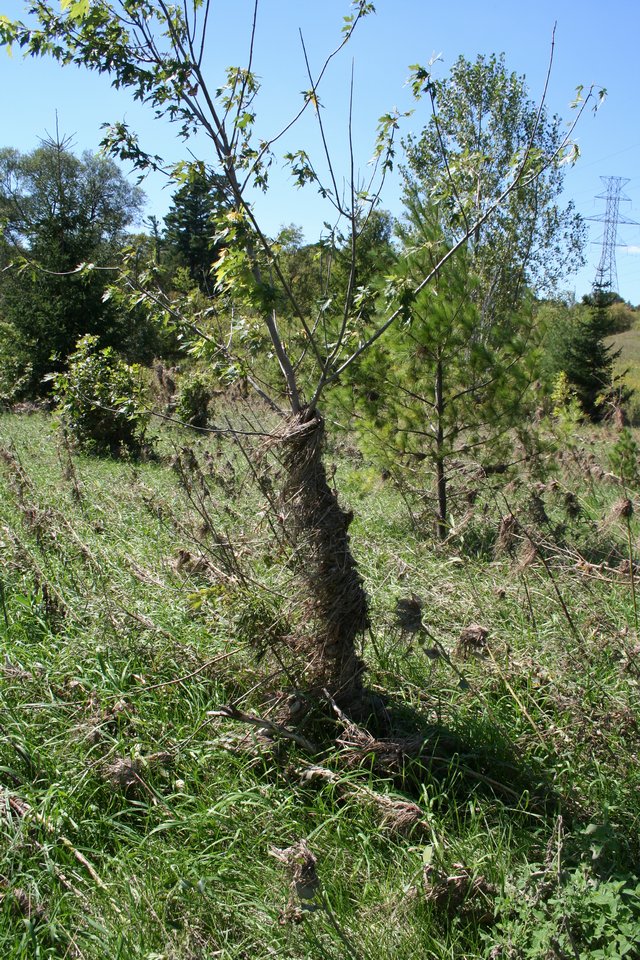
...and debris in the arms of the trees, and wrapped around the plants. It was then that it really began to dawn on me just how much water must have been running through this place. The flood plain had literally become just that.


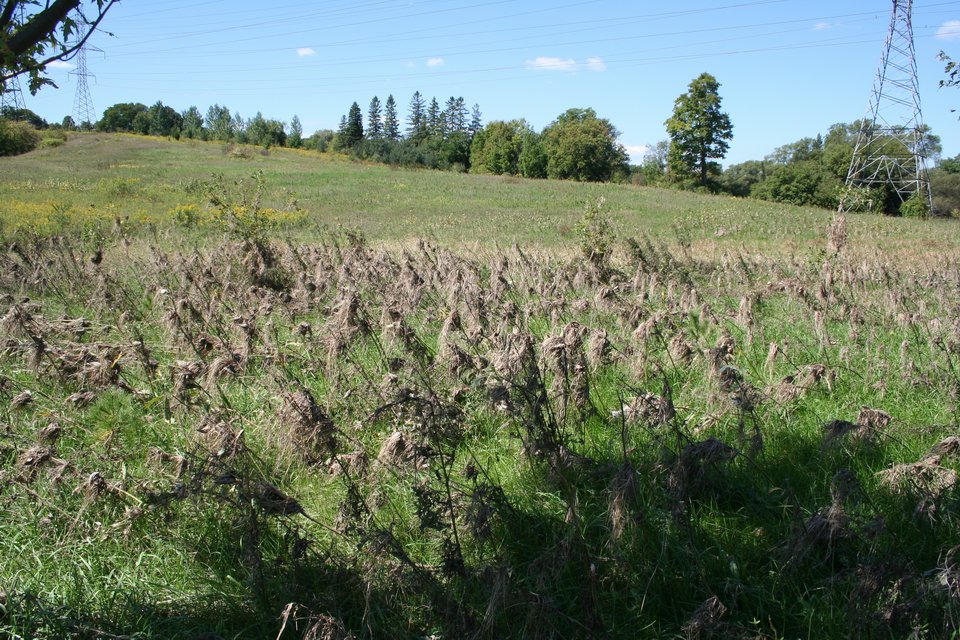
Across the field, some of the plants must have been bowed down, so they exaggerate the depth of the water passing...


Evidence of rushing water on planet Earth


Waist-height debris

...but not the trees by the river. They report the depth of the water as it fell over the bank. This water here must have been the chest height of a grown man. Incidentally, the background of this picture shows where the beaver dam had been. It's been utterly washed away. Beavers must have dealt with this millions of time in their history. I only hope these ones lived to build again.


Chest-height debris


Scour at beaver dam

To give you some idea of just how powerful the water was passing through here, look at these massive sitting logs. It would have taken a crane to move them. You can see nature found its own way.


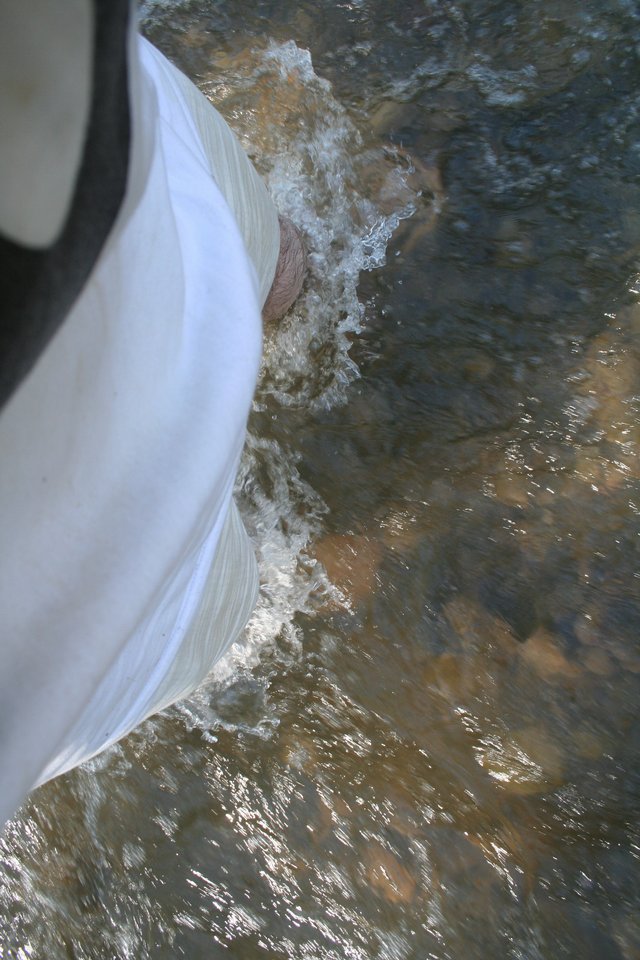
At this point on the river, I did make my way down to the water. I was determined to see the far side, even though I'd never forded the river here before (in fact, this represents the first time I have actually forded the East Don at any point). Looking east towards where the beaver dam sat, I noticed this massive treed that had been felled by the water. Situated at the bend in the river, it was doomed. The water hit it full force, scoured the earth from its very roots, and when it was left with nothing to hold onto, finally pushed it aside. I can't imagine what it would have been like to have been anywhere near this place when this was going on.


The water was actually mostly shallow there, running over gravel, except at one place where it had carved itself a race only a few yards wide. It was knee deep, and running at ten or fifteen miles an hour, I'd guess. Very strong, making it a challenge to stand up. The rocks were hard to walk on, blunt but still painful, and since I was carrying a very expensive camera, I had to choose my footfalls well. It took a minute or two to make my way.


Having crossed the river, I made my way to the far bend, and here I found evidence that life goes on...


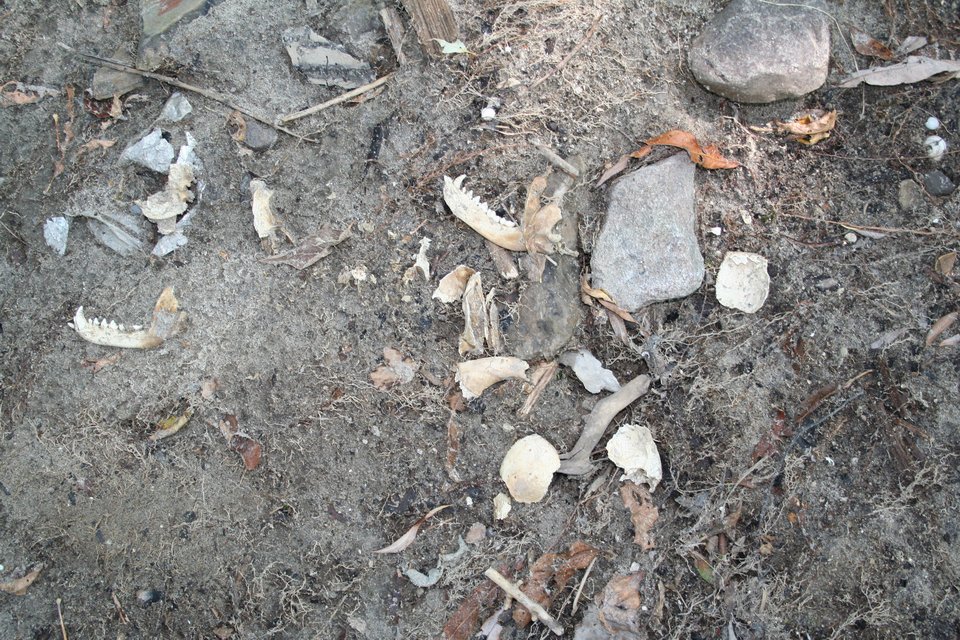
...or does it? I almost literally stumbled over these bones. They are the jaws and some of the cranium of some unfortunate animal. Did this animal drown in the flood, only to have his or her body picked over, cleaned by the ants, and discovered by a passing human three weeks later? Or did the water unearth the bones of some long-gone animal from years ago? Initially, I left the bones. Later on, as I was on my way back, I reconsidered. I found a bit of plastic hanging in the trees, and recovered the three jaws I found there. I know it seems macabre, but I was motived by sympathy and my desire that the little bones should mean something to someone. I tucked them into my back pocket, all the while the lyrics from the Talking Heads song Swamp running through my head: Now lemme tell you a story; the devil, he has a plan... bag of bones in his pocket... get anything you want...


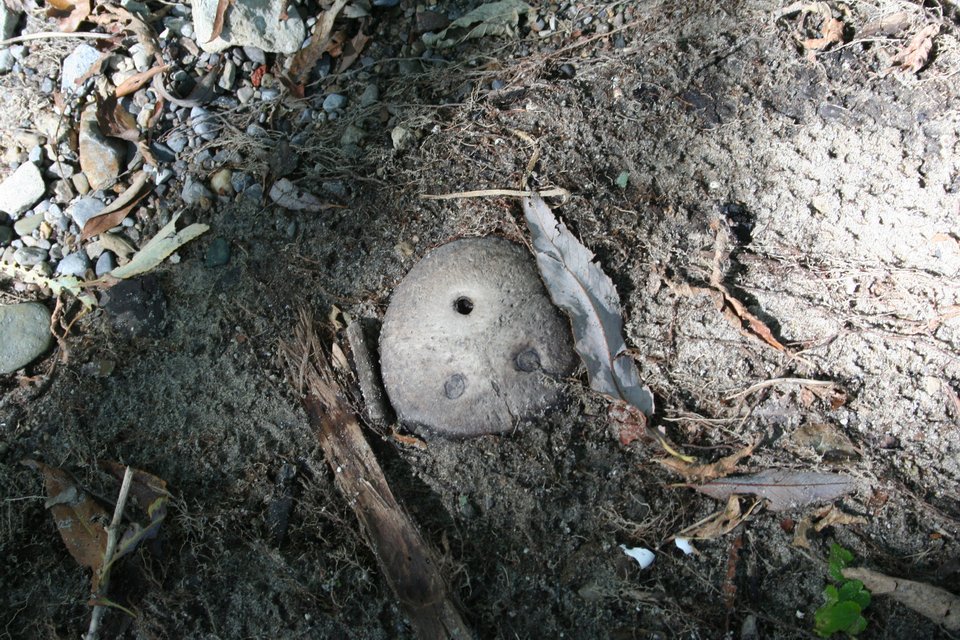
But first, I explored. Not far from where I found the bones, I found this... very unusual find, buried in the sand of a Canadian river. It's a coconut. I'd love to know the story of how it came to be lying here. Probably a mundane and fairly unsurprising story, but... who knows? Actually, when you stop and think about it, it's pretty amazing that coconuts wind up in southern Ontario anyway... it's a miracle of human agency. It's the quirk of how it wound up mostly buried in sand in the East Don River that would intrigue most of us jaded modern types.


Where's the Professor when you really need him?

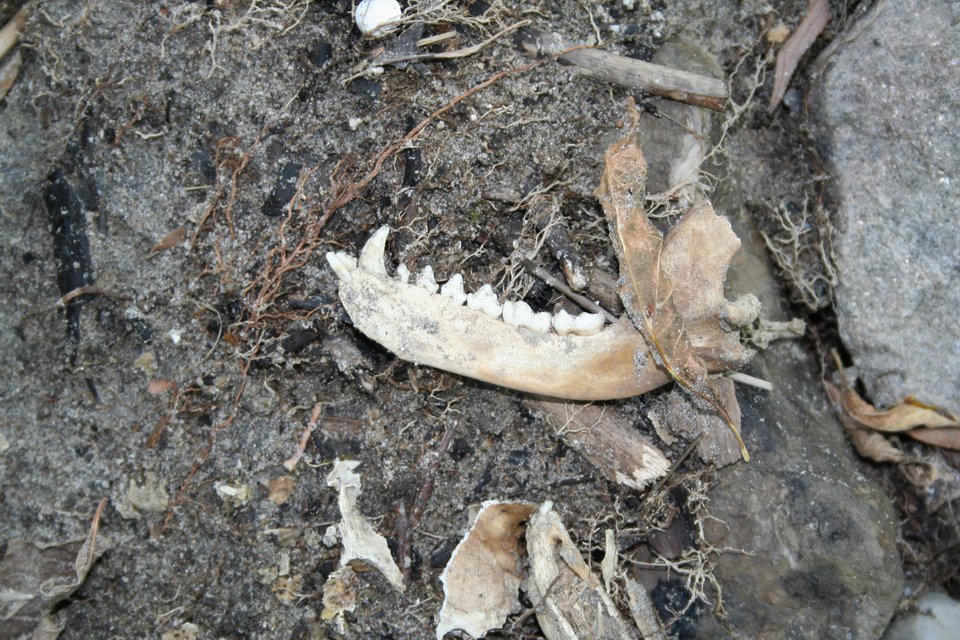
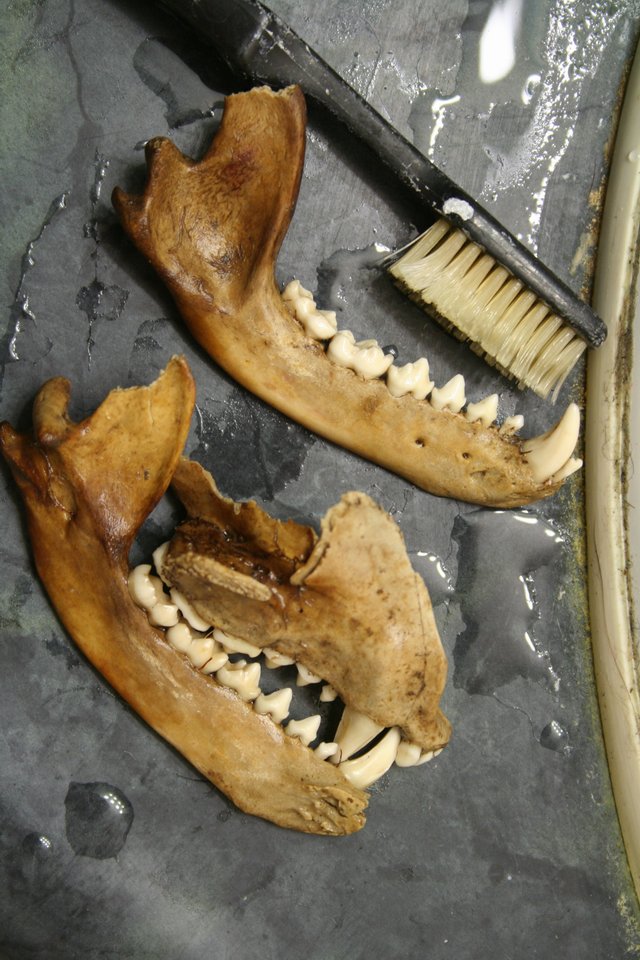
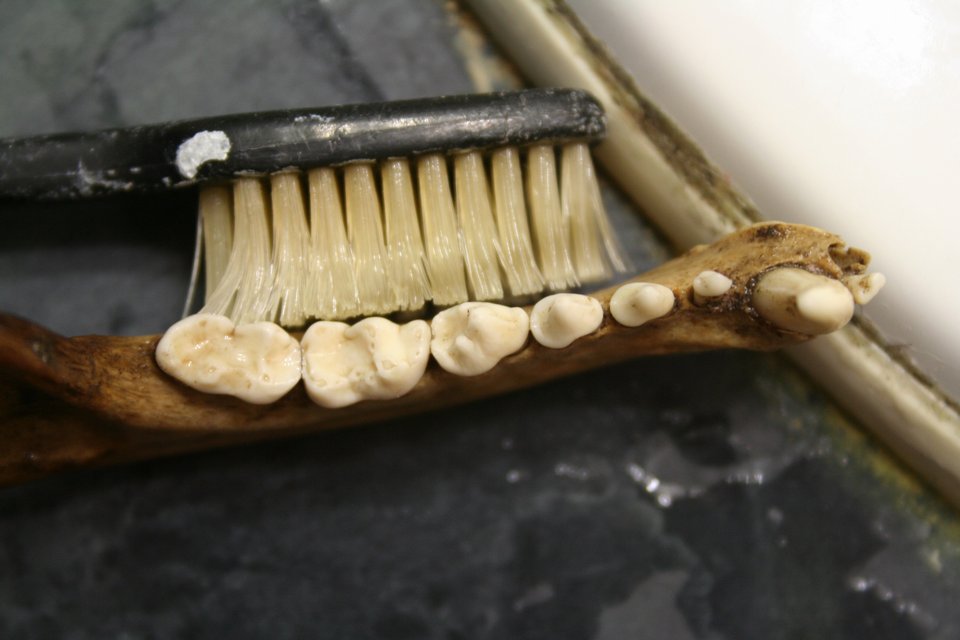
When I got home, I dug out the three bones I'd recovered and cleaned them off. I used an old toothbrush I keep around to clean the grout between the tiles in the bathroom. I tried to match up the jaws. As it turns out, I blew it: mixed up the right and left bottom jaws. But you still get some idea of how the top and bottom jaws fit together.


This is the bottom left jaw.


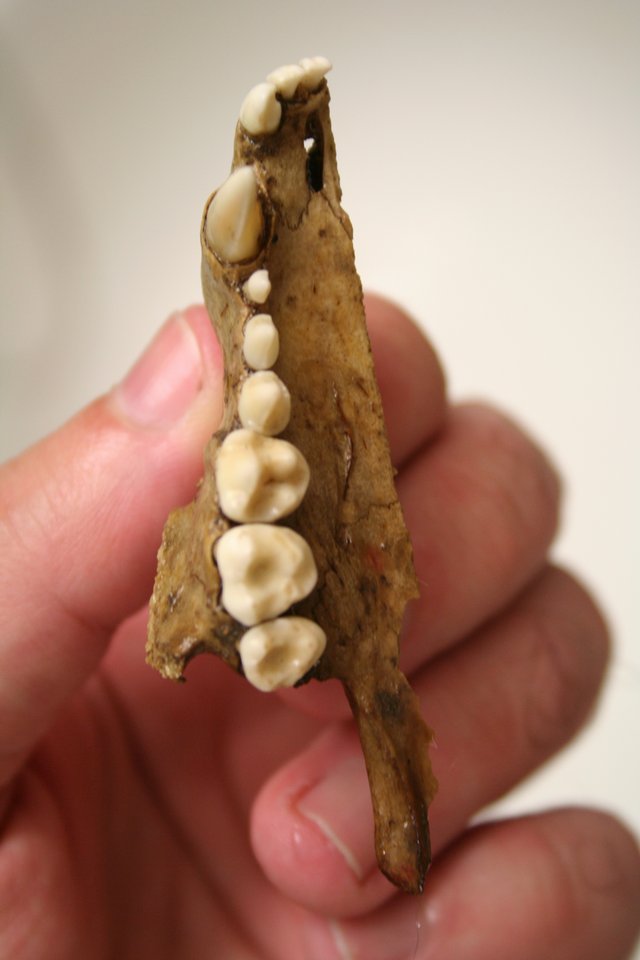
And this is the top right, where the roof of the mouth was.


When I first found these bones, I wondered what kind of animal had left them behind. At first, due to the prominent canines, I thought it was some sort of wild dog or cat. Perhaps, I thought, a bobcat, or a coyote pup. It was when I got them home and started cleaning them up and taking a good look at them that I started deducing otherwise. Notice that the molars are broad and flat like ours, rather than narrow and pointed like your dog's or your cat's. Now I'm no expert by any means in taxonomy, but what little I've read led me to speculate that such an animal would be a fellow omnivore. When I thought of that, immediately I thought of raccoons, which are extremely prevalent within Toronto's urban environment... there are an estimated forty-to-fifty thousand of them within the City of Toronto alone, and probably hundreds of thousands across the GTA: roughly one raccoon for every fifty humans. So this morning, I went online to look for what a raccoon's skull looks like. Among others, I found this one. As you can see, there's little mistaking it. The bones I found almost certainly came from a raccoon. I'm not sure of the age of the animal who laid down these bones, but he or she wasn't a baby. The molars have points worn down to the dentine, but still are still robust, so I'm guessing an adult, maybe of middle age for a raccoon... which would be about age three in the wild, based on things I've read that give them an average five years outside captivity. That said, urban raccoons, who manage not to get run over, can live a decade or more due to the proximity of warm shelter and ample foodstuff, courtesy of their friendly neighbourhood primates (you and me). So perhaps this raccoon was five or so.

I wonder about the raccoon who grew these bones, these teeth. Was it male or female? Was she someone's mother? Someone's father? What did he or she see in that short lifetime? What kind of life was it? What happened at the end? Most animals die and are never regarded in any sense. At least this raccoon drew the attention of another, more intelligent animal, who recognized it for what it was, and brought some kind of meaning a relevance to its death, and, by extension, its life. I suppose in some odd way, it ties in with what's been going on in New Orleans. The water came, lives were lost. I don't know. Maybe it resonates with me somehow, in this small, strange way.